
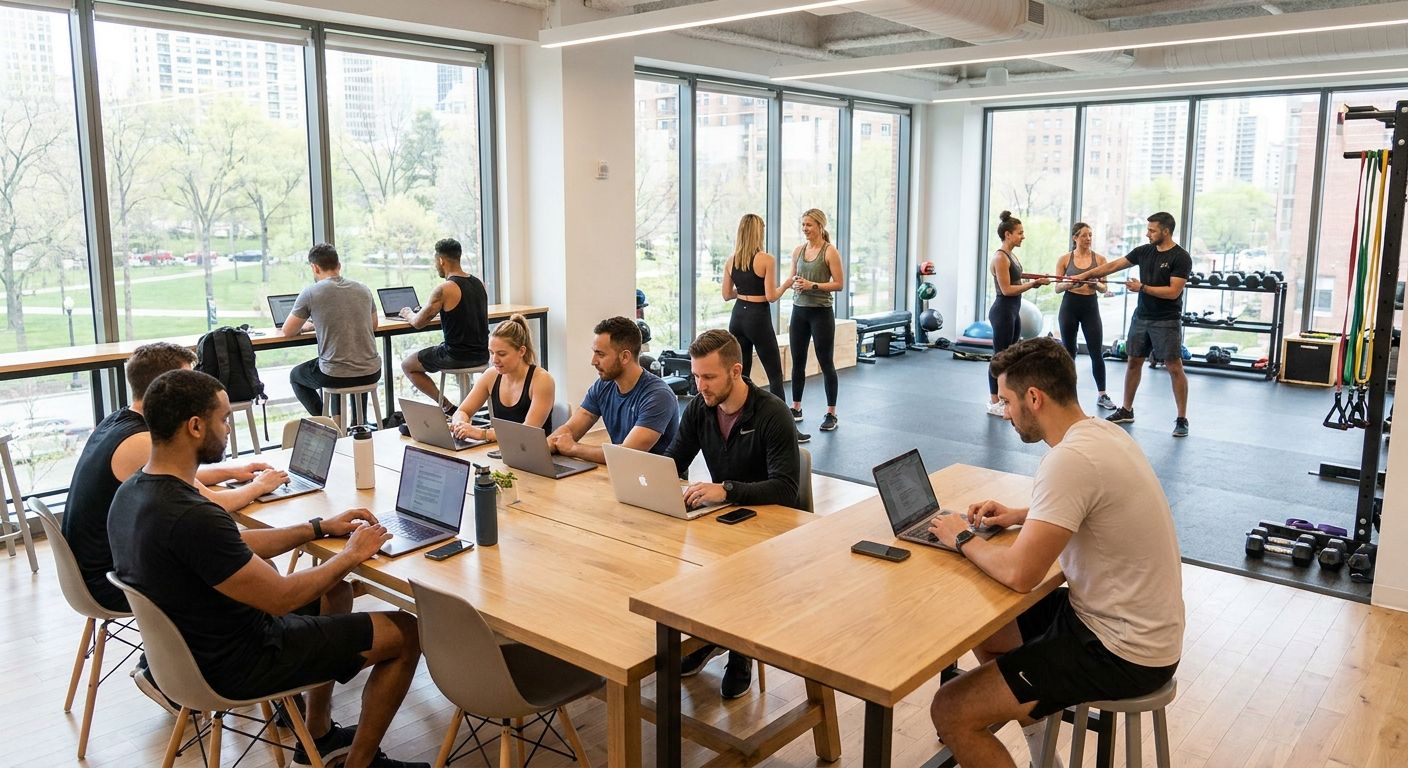
Personal trainers and fitness coaches don't run their business from a desk — sessions happen in parks, gyms, and living rooms. But programming, invoicing, and the occasional client consult still need a real workspace, and a coworking space for personal trainers has to fit around a schedule that looks nothing like a nine-to-five. This guide breaks down what actually matters when you're picking one in 2026, and which plans at Westend Business Hub in Werribee fit a split-shift coaching day.
- A dedicated desk plan for solo entrepreneurs suits trainers who need the same spot for programming and admin every day — Buy.
- A casual, part-time coworking membership fits split-shift days better than a full-time desk — Buy.
- Meeting room hire covers client onboarding and fitness assessments without a monthly lock-in — Consider.
- A virtual office alone works only if you never need a physical room to see clients face to face — Skip unless mail is your only need.
Why this matters
Most personal trainers and fitness coaches split their day into two shifts: early morning sessions before 8am, then a gap, then evening sessions from 5pm. That gap is where the business actually gets run — programming, invoicing, follow-up messages, and sometimes a consult call with a new client who wants to see a real workspace, not a kitchen table with a laptop propped against the fruit bowl.
A proper coworking space for personal trainers fills that gap without charging you for hours you'll never use. It also gives you something a home office can't: a professional address for ABN registration, insurance paperwork, and the trust signal that comes with a legitimate business location in Werribee rather than a residential street.
Who this is for
This guide is built for the solo PT running 15 to 20 sessions a week out of a park, a client's home gym, or a commercial gym floor, plus the online coach doing check-ins over video. If you need somewhere to write programs, take a call, or meet a new client for an initial assessment without renting a full gym space, keep reading.
What to look for in a coworking space for personal trainers
Off-peak access hours
Your busiest hours are 6am to 9am and 5pm to 8pm — the opposite of a typical office day. A space that only opens standard business hours is dead weight for half your working week, so check the access hours before anything else.
A private space for client calls
A coworking space for personal trainers only earns its cost if you can take a video consult without background noise. Open-plan desks are fine for programming, but a new client assessment call needs a quiet room, not headphones and a hopeful attitude.
A professional business address
Registering an ABN, setting up business insurance, or listing your practice on Google all ask for an address. A residential address works, but it puts your home on public record. A dedicated business address separates the two cleanly.
No long lock-in
Client rosters swing with the season — new year sign-ups, mid-year drop-off, summer intensity blocks. A 12-month lock-in on a desk you might only need three days a week some months is the wrong bet. Flexibility matters more here than in most other trades.
A bookable room for onboarding and assessments
Initial consults, movement screenings, and program reviews go better in a proper room with a table, not standing in a hallway. Book-as-needed access beats paying for a room you use once a fortnight.
Fast, reliable wifi
If you run online coaching alongside in-person sessions, streaming a form-check video or hosting a Zoom check-in needs internet that doesn't stutter mid-call. This is a baseline requirement, not a nice-to-have.
Top picks for personal trainers and fitness coaches
The steady base. Dedicated desk plans for solo entrepreneurs give you the same seat every day at Westend Business Hub, which matters if your programming setup — dual monitor, printed assessment forms, a filing system for client files — needs to stay put. It's built for someone who treats coaching as a full business, not a side gig, and wants one spot they don't have to pack up daily. If your admin load runs five days a week around your training blocks, this is the pick. Buy.
The flexible pick. A split-shift coaching day rarely needs a desk from 9 to 5. Best coworking memberships for casual and part-time use charge for the days you actually show up, which suits a trainer whose midday gap shrinks and grows depending on the week. This is the pick for anyone still building a full roster in 2026 and not ready to commit to daily desk rent. Buy.
The client-facing pick. For the first consult, a fitness assessment, or a program review that needs a table and privacy, best meeting rooms for small business in Melbourne's west covers it without a standing monthly cost. Book it for the hour you need it, then get back to the gym floor. Good for occasional use; not a substitute for a daily base if you're seeing clients in-office regularly. Consider.
The address-only pick. If you train exclusively at gyms or clients' homes and never need a physical room, a virtual office covers the ABN registration and business mail without paying for a desk you'll never sit at. It's the leanest option, but it doesn't help if a client ever asks to come in for a consult. Skip unless mail and registration are your only requirements.
“If your business address is your home address, you're not running a coaching business — you're running a hobby with an invoice template.”
Find your fit at Westend Business Hub
Compare desk and membership options built for split-shift schedules.
What to avoid
- Full-time serviced offices with 12-month leases. They look professional but lock you into rent that doesn't flex with a seasonal client roster.
- Spaces with no early or late access. If the front desk locks at 6pm sharp, you can't run your 6pm session and then walk in to finish an invoice.
- Shared open desks with no bookable room. Fine for solo admin, wrong for the day you need to sit a new client down for a real conversation.
Verdict comparison
| Option | Best for | Flexibility | Verdict |
|---|---|---|---|
| Dedicated desk plan | Daily admin + programming | Fixed seat, daily use | Buy |
| Casual/part-time membership | Split-shift schedules | Pay for days used | Buy |
| Meeting room hire | Client consults, assessments | Book as needed | Consider |
| Virtual office only | Registration + mail | No physical room | Skip unless address-only |
FAQ
Is a coworking space worth it for a personal trainer?
Yes, if your day includes a midday admin gap or client consults — it gives you a professional base without renting a full office. A trainer training clients on-site or in gyms only needs the workspace for the business side, not the sessions themselves.
What's the best coworking option for a part-time fitness coach?
A casual or part-time membership works best because you only pay for the days you actually use, which fits a roster that changes week to week. A daily desk plan makes more sense once your admin load becomes a five-day-a-week job.
Can I use a coworking address for my personal training business registration?
Yes, a coworking or virtual office plan can serve as your registered business address for an ABN or insurance paperwork instead of your home address. This keeps your residential details off public business records.
Do I need a meeting room if I train clients outdoors or at a gym?
You still need somewhere for the initial consult, a program review, or an assessment that doesn't happen mid-workout. A bookable meeting room covers that without committing to a daily desk.
How much desk time does a solo personal trainer actually need?
Most solo trainers need a few hours a day for programming, invoicing, and messages rather than a full workday, which is why casual or part-time plans usually fit better than a full-time desk.
Is a virtual office enough for a fitness coaching business?
A virtual office covers your business address and mail but gives you no physical room, so it only works if you never need to meet a client or sit down to work outside your training sessions.
What should I avoid when choosing a coworking space as a trainer?
Avoid long lock-in contracts and spaces without early morning or evening access, since both work against a schedule built around before-work and after-work sessions.
One last thing
The trainers who get the most out of a coworking space aren't the ones who book the biggest plan — they're the ones who match the plan to their actual gap in the day. If that gap is two hours between an early session and an evening one, a casual membership at Westend Business Hub covers it for less hassle than a full desk you'll half-use in 2026.


