
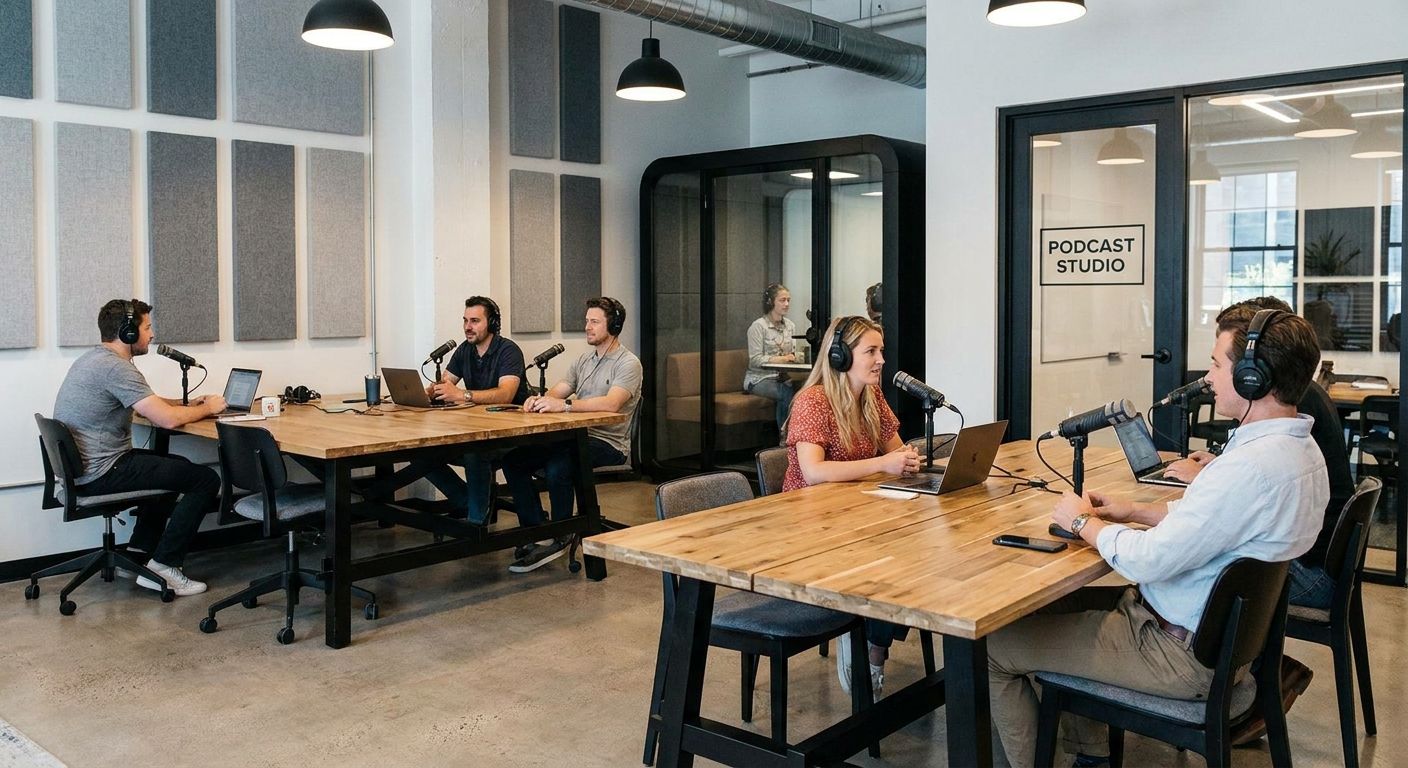
Recording a podcast from a kitchen table works until the dog barks mid-interview or the wifi drops during a live stream. Podcasters who want repeat guests and sponsors need a base that sounds professional and looks professional, and that's where a coworking space for podcasters in Werribee earns its keep.
- A coworking space for podcasters needs a quiet bookable room, not just a desk near a window.
- Westend Business Hub's private office for creative agencies and studios suits solo podcasters who record daily. Buy.
- Hourly meeting rooms work for weekly interview shows that don't need a permanent room. Consider.
- Skip open-plan hot desks for anything involving a microphone; ambient noise ruins the take.
- A dedicated desk plan covers editing and outreach days between recording sessions.
Why this matters
Guests judge a show by what they hear in the first thirty seconds, and echo, traffic noise, or a barking dog in the background reads as amateur even if the content is sharp. Sponsors ask where a show records before they commit budget, and "my spare room" doesn't inspire confidence the way a proper coworking space for podcasters does.
There's also the practical side: editing takes longer than recording, outreach emails need a real address to look credible, and gear needs somewhere safe to live between sessions. A coworking base in Werribee solves all three without the overhead of leasing a full studio.
Who this is for
This guide is for solo podcasters, two-person hosting teams, and small production outfits based in Melbourne's west who record weekly or more and need a repeatable, professional setup rather than a one-off booking. If you're recording once a month from a friend's living room, you probably don't need this yet. If you're chasing sponsors, booking guests who ask for a Zoom link with a decent backdrop, or editing five hours a week, keep reading.
What to look for in a coworking space for podcasters
Soundproofing and quiet zones
A microphone picks up everything a human ear filters out: HVAC hum, hallway chatter, the espresso machine two rooms over. Look for rooms with soft furnishings, closed doors, and distance from the main thoroughfare rather than an open desk near the entrance.
Reliable high-speed internet
Remote guests, live streaming, and cloud backups all choke on shaky wifi. A dropped call mid-interview means starting the recording over, which costs you and your guest time neither of you wanted to spend twice.
Bookable private rooms by the hour
Not every show needs a room five days a week. Hourly or half-day booking on a meeting room means you pay for recording time, not empty desk time, and it keeps costs sane while your show is still building an audience.
Storage for gear between sessions
Carrying a boom arm, two mics, and an audio interface across Werribee every session gets old fast. A locker or a private office with a lockable door means the setup stays put and you walk in ready to hit record.
A professional address for outreach
Guest bookers, sponsors, and PR agencies check where a show is based before they reply. A real business address attached to your podcast's contact details reads more credible than a personal Gmail signature with no location.
Flexible access hours
Some hosts record early before day jobs start, others record late after guests finish their own workday. A space with generous access hours matters more here than in a typical 9-to-5 office setup.
Top picks for a podcast base in Werribee
The soundproof pick: private studio-style office
The private office for creative agencies and studios is built for exactly this kind of noise-sensitive work. It's a closed room, not a curtained-off corner, which matters when a single door separates a clean take from a ruined one. Daily podcasters who record and edit in the same space should treat this as the default. Buy.
The safe pick: hourly meeting room for interviews
Booking a room only when a guest is confirmed keeps costs tied to output. The best meeting rooms for small business in Melbourne's west page covers what's included for client-style sessions, which translates directly to guest interviews. This suits shows recording one to three episodes a week rather than daily. Consider.
The daily grind pick: dedicated desk
Editing, sponsor emails, show notes, and social clips eat more hours than recording does. A dedicated desk plan for solo entrepreneurs gives a fixed spot for that work without paying for a full private room you only need for the recording itself. Buy if you already have a quiet recording setup elsewhere.
The community pick: coworking common area
The coworking space for freelancers and solo founders is worth it for the networking, not the recording. Guests, co-hosts, and sponsors often come from the same room you work in, and 2026 has made local business networks more valuable as referral costs elsewhere climb. Treat this as a supplement to a quiet room, not a replacement. Consider.
The wildcard: rotate booking around guest schedules
If your show records irregularly, read how to book a meeting room for a client pitch before committing to a fixed plan. The booking logic for a client pitch and a guest interview is nearly identical: short notice, need for quiet, need for a professional backdrop. Consider before signing anything longer-term.
What to avoid
- Open hot desks near the entrance. They look flexible on a pricing page but foot traffic and door chimes end up on every recording.
- Any space that only offers monthly commitments with no hourly option. Shows in their first year of 2026 growth need to test formats before locking into a fixed room cost.
- A virtual-only address with no physical room access. Fine for mail and registration, useless the day you need to record a guest interview in person.
Verdict comparison
| Pick | Best for | Quiet level | Booking flexibility | Verdict |
|---|---|---|---|---|
| Private studio-style office | Daily recording + editing | High | Ongoing plan | Buy |
| Hourly meeting room | Weekly interviews | High | By the hour | Consider |
| Dedicated desk | Editing and admin days | Moderate | Ongoing plan | Buy (paired with a room) |
| Coworking common area | Networking and guest sourcing | Low | Drop-in | Consider |
Book a quiet room for your next recording
Check availability for private rooms and hourly meeting spaces in Werribee.
FAQ
What's the best coworking space for podcasters in Werribee?
A private office with a closed door and soundproofing works best for regular recording, while an hourly meeting room suits occasional interviews. Westend Business Hub offers both, so the right pick depends on how often you record each week.
Do coworking spaces have soundproof rooms for recording?
Not every coworking space does, so check specifically for closed private rooms rather than open desks or curtained booths. A room away from the main walkway and HVAC units handles background noise far better than a general hot desk.
How much internet speed do I need to record and stream a podcast?
Most video and audio podcast setups need stable upload speed above 10 Mbps for smooth remote guest calls and live streaming. A coworking space with business-grade internet avoids the buffering that ruins a live recording.
Can I book a meeting room just for a few hours to record interviews?
Yes, hourly meeting room bookings exist specifically for this use case and cost less than a full-day private office rental. This suits shows recording one or two guest episodes a week rather than daily.
Is a virtual office enough for a podcast business, or do I need physical space?
A virtual office covers mail and a professional address but doesn't give you a room to record in. Most active podcasters need physical access to a quiet room at least a few times a week, even if they pair it with a virtual address for admin.
What's the difference between a private office and a meeting room for podcast production?
A private office is a fixed room you hold on an ongoing plan, while a meeting room is booked by the hour as needed. Daily podcasters lean toward a private office; weekly or occasional shows lean toward hourly meeting room bookings.
How do I choose between a dedicated desk and a private studio room?
Choose a dedicated desk for editing, admin, and sponsor outreach, and pair it with an hourly-booked room for the actual recording. Combining both usually costs less than a full-time private studio if you're not recording every day.
Can I store podcast equipment at a coworking space between sessions?
Private offices and dedicated desk plans typically include lockable storage, which saves you from carrying mics and interfaces back and forth each session. Check with the space directly on what storage comes with each plan before signing up.
One last thing
Most new shows overspend on a private studio before they've proven a recording cadence. Start with an hourly meeting room for the first two months of 2026, track how many sessions you actually book, then move to a dedicated private office once the pattern is clear. That order avoids paying for empty room time while your show is still finding its audience.


