
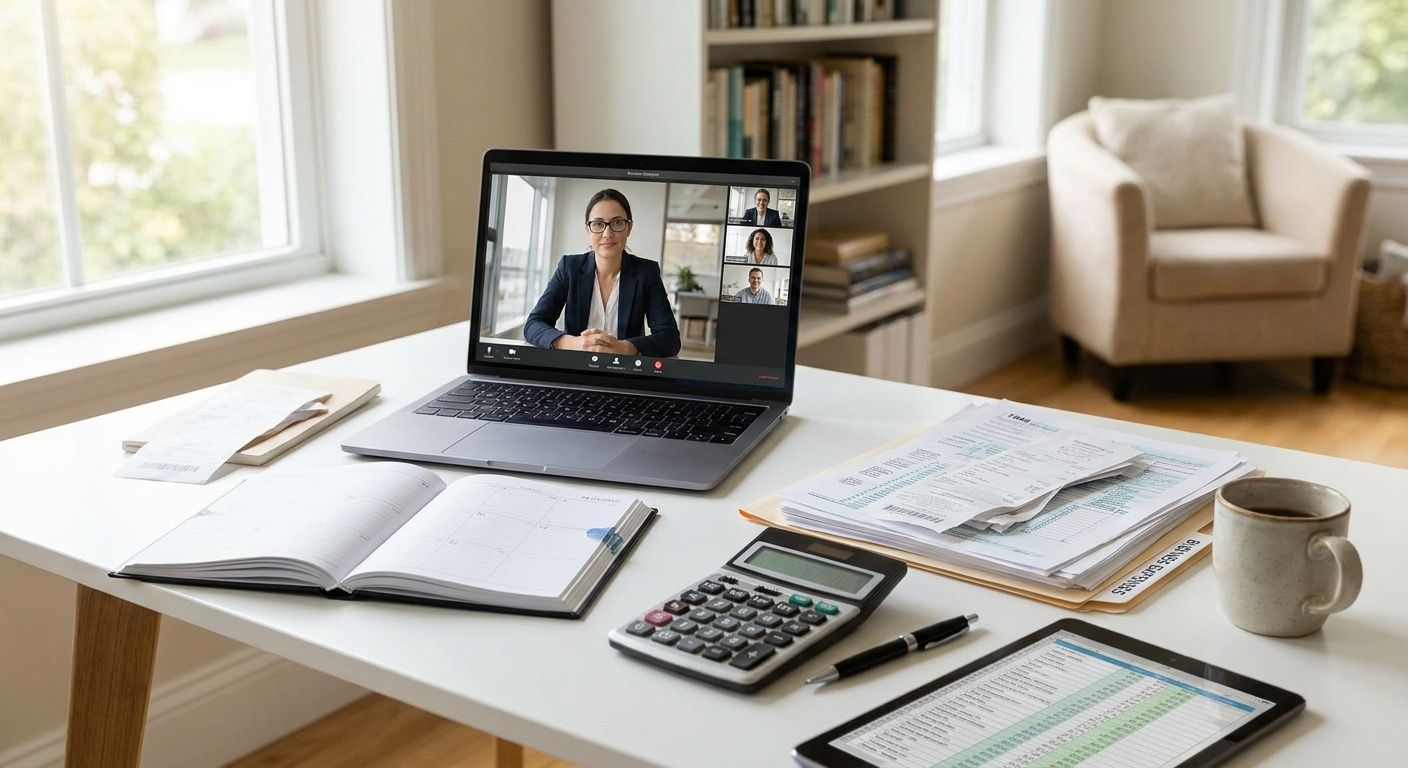
Running your business from a home office in Werribee or Truganina doesn't mean you skip the deductions that come with a proper business address. A virtual office plan is a legitimate operating cost, and understanding how to record it properly means less time worrying about a Tax Office review and more time growing the business.
- A virtual office tax deduction applies because the plan is a genuine business operating expense, not a personal cost.
- Keep the tax invoice, the ABN of the provider, and proof of business use for at least five years.
- Westend Business Hub issues a compliant tax invoice for every virtual office plan, ready for your accountant.
- Bundling a virtual address with occasional meeting room hire strengthens the case that the space is genuinely used for business.
- A registered tax agent, not a blog post, should confirm the exact treatment for your 2026 return.
Why this matters
A lot of sole traders and small teams pay for a virtual office out of a personal account, forget to keep the invoice, then guess at tax time whether the cost even counts. It does, and it should be treated the same way you'd treat rent on a physical office: an operating cost tied to earning your income.
The risk isn't that the deduction gets rejected outright — it's that sloppy record-keeping turns an easy claim into a headache during a review. Get the paperwork right once and the virtual office tax deduction becomes a routine line item every financial year, not a scramble every June.
What you'll need
- A registered ABN linked to the business claiming the expense
- A tax invoice from your virtual office provider showing GST (if registered)
- A separate business bank account or card used to pay the plan
- A simple spreadsheet or accounting software (Xero, MYOB, QuickBooks) to log the expense
- Evidence the address is actually used for business — mail redirection, a listing on your Google Business Profile, or client correspondence
- 15–20 minutes to set up the recurring expense category properly
The steps
1. Confirm the plan is genuinely for business use
The deduction only holds up if the virtual office is used to run the business, not as a convenient mailing address for personal parcels. Register the address as your principal place of business or registered office with ASIC and use it consistently across invoices, contracts, and your website.
Common mistake: mixing a personal PO box habit with a business virtual address, which muddies the paper trail if the ATO ever asks what the address is actually for.
2. Pay from a business account, not personal funds
Expenses paid from a dedicated business account are far easier to reconcile and defend than ones buried in a personal statement. If you're a sole trader or freelancer still using one account for everything, this is the year to split them.
Set up a standing payment for the virtual office plan from the business account so the transaction lands in the same place every month or quarter.
3. Request and store a proper tax invoice
A valid tax invoice needs the provider's ABN, the date, a description of the service, and the GST component if applicable. Westend Business Hub issues this automatically for every virtual office plan, so there's no back-and-forth chasing paperwork before lodgement.
Store invoices in a labelled folder — cloud storage, not your email inbox — because the ATO can ask for records going back five years.
4. Categorise the expense correctly in your accounting software
Code the plan under "office expenses" or "rent and occupancy" rather than a vague "miscellaneous" bucket. Consistent categorisation each month makes your accountant's job faster and your quarterly BAS more accurate.
Expected outcome: at the end of the financial year, one report pulls every virtual office payment without manual searching.
5. Reconcile GST if you're registered
If your business turns over more than $75,000 a year, you're required to register for GST, and that means claiming the GST credit on your virtual office invoice each Business Activity Statement. Miss this step and you're paying GST you're entitled to claim back.
Common mistake: forgetting to check whether the provider is GST-registered before assuming a credit applies.
6. Bundle related costs under the same expense trail
If you occasionally book a meeting room for a client pitch or hire a room for a workshop, log those under the same office-expense category. It reinforces that the address and the associated services exist to run the business, not to sit idle.
7. Review the claim with a registered tax agent before lodging
A generic guide can tell you what's typically deductible; only a tax agent looking at your actual structure — sole trader, company, or trust — can confirm the exact treatment for your 2026 return. This is the step people skip, and it's the one that actually protects the claim.
Troubleshooting
- No invoice from a past payment: Contact the provider directly and request a reissued tax invoice; most keep billing history on file.
- Personal and business expenses are mixed on one card: Separate them going forward and flag the historical transactions clearly for your accountant rather than guessing at a split.
- Not sure if you're GST-registered: Check your ABN status on the Australian Business Register — it lists GST registration status against your ABN.
- Virtual office listed as a personal address on old documents: Update ASIC records and your Google Business Profile so the address matches consistently across every business touchpoint.
- Unsure whether meeting room hire counts as a separate expense: It does — log it separately but under the same broad occupancy category as the virtual office plan.
- Accountant asks for proof of business use: Mail redirection records, a business listing, and client-facing invoices showing the address are usually enough.
Get a virtual office invoice ready for tax time
Set up a Werribee business address with compliant tax invoices from day one.
Tools and resources
- The Australian Business Register — to confirm ABN and GST registration status
- Accounting software (Xero, MYOB, or QuickBooks) for expense categorisation
- How to register a business address without renting an office — for the setup side before the tax side
- A registered tax agent or BAS agent for the final sign-off on your specific structure
What to do next
Once the record-keeping habit is in place, the next decision is usually whether a virtual office alone is enough or whether the business needs a physical presence part of the time. Virtual business address for Melbourne startups covers what's typically included in a plan before you compare it against a desk or private office.
FAQ
Is a virtual office tax deductible in Australia?
Yes, a virtual office plan is generally deductible as a business operating expense when it's used to run the business, similar to rent on a physical office. Keep the tax invoice and pay from a business account to support the claim.
What documentation do I need to claim a virtual office tax deduction?
You need a valid tax invoice showing the provider's ABN, the service description, and GST if applicable. The ATO can request records going back five years, so store invoices in a dedicated folder rather than an email inbox.
Can sole traders claim a virtual office as an expense?
Yes, sole traders and freelancers can claim a virtual office plan the same way as any other business occupancy cost, provided the address is genuinely used for business correspondence and listings. Paying from a separate business account makes the claim easier to substantiate.
Do I need to be GST-registered to claim a virtual office deduction?
No, GST registration isn't required to claim the expense itself, but it changes how you treat the GST component. Businesses turning over more than $75,000 a year are required to register for GST and can then claim the GST credit on the invoice.
How much can I claim for a virtual office in 2026?
The full cost of the virtual office plan is typically claimable as a business expense in the 2026 financial year, but the exact treatment depends on your business structure. A registered tax agent should confirm the specific figure for your return.
Is a virtual office better than a home office for tax purposes?
A virtual office gives you a clean, separate business expense with a straightforward invoice trail, while home office claims require apportioning costs like electricity and internet between personal and business use. Many small business owners find the virtual office simpler to document at tax time.
Can I claim meeting room hire alongside a virtual office plan?
Yes, meeting room hire is a separate deductible expense that sits under the same broad occupancy category as your virtual office plan. Log each booking with its own invoice to keep the expense trail clear.
What happens if I don't have a tax invoice for a past virtual office payment?
Contact the provider and request a reissued tax invoice, since most providers keep billing records on file. Without an invoice, the ATO may disallow the claim during a review.
One last thing
The businesses that get the most out of a virtual office tax deduction aren't the ones chasing the biggest write-off — they're the ones who treat the address consistently across ASIC records, invoices, and their Google Business Profile from day one. That consistency is what actually holds up if the ATO ever asks a question, not the size of the claim.


