
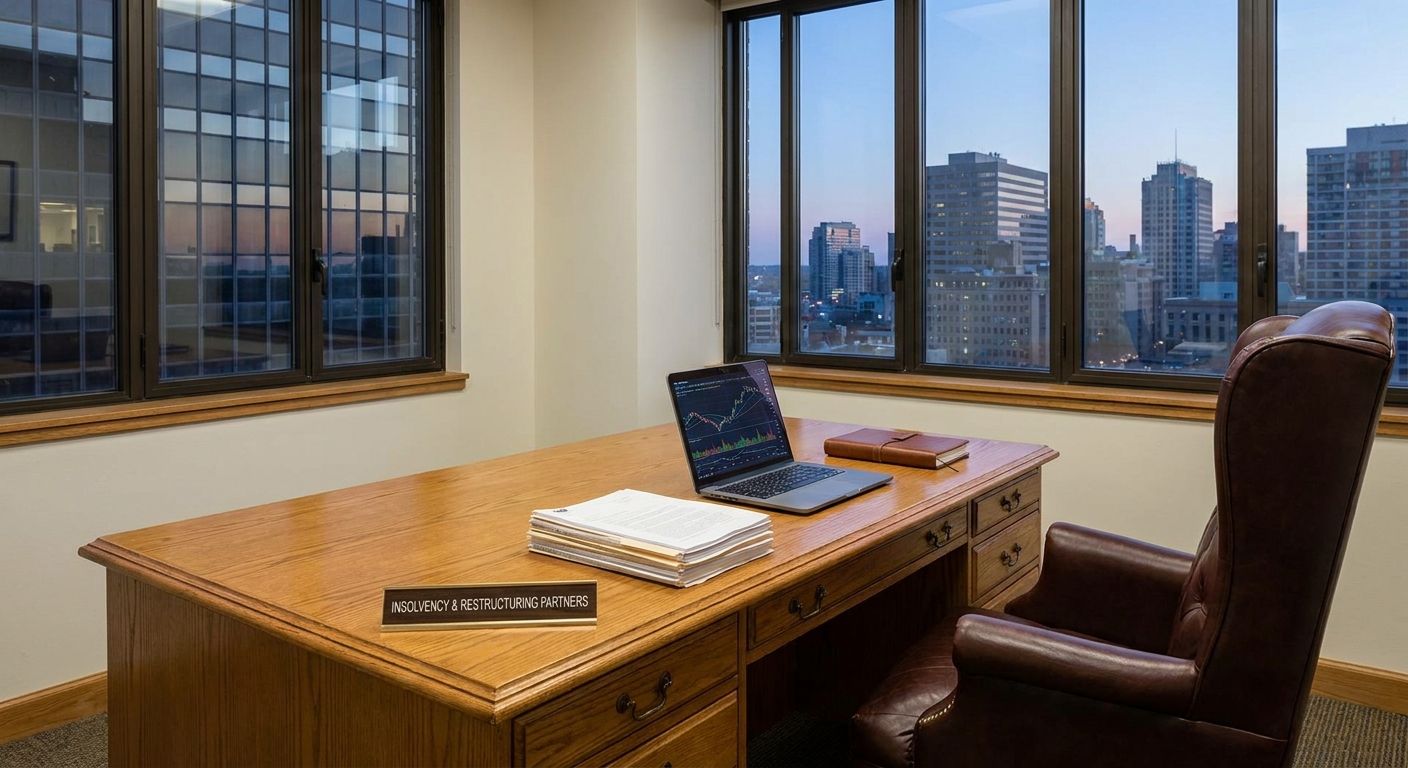
A private office for insolvency practitioners is a lockable, dedicated workspace at a fixed business address, used to run confidential creditor files, hold statutory meetings, and separate personal registration details from client-facing paperwork. Insolvency and restructuring work carries different confidentiality and compliance weight than most professional services, so the space needs to handle sensitive appointments, physical document storage, and short-notice creditor meetings without the practitioner working from a kitchen table.
- Westend Business Hub in Werribee offers a private office for insolvency practitioners with lockable rooms and on-site meeting space — best for sole practitioners and small restructuring teams.
- Home offices create ASIC registration and confidentiality risk for administrators handling creditor files in 2026.
- Meeting room hire for client presentations solves the creditors'-meeting problem without a long lease commitment.
- A staged move from virtual office to private office lets a practice scale desk-by-desk as caseloads grow.
Why a private office matters for insolvency and restructuring practitioners
Insolvency practitioners deal with company books, employee entitlement records, and creditor correspondence that can't sit on a spare bedroom desk. ASIC registration also requires a legitimate business address — not a residential one you'd rather keep off public record. A private office for business brokers and M&A advisors style setup, adapted for restructuring work, solves both problems: a fixed, professional address plus a lockable room where files don't leave the desk.
The nature of the work also means client meetings are rarely routine catch-ups. A creditors' meeting, a director interview, or a mediation session needs a room that looks neutral and professional — not a cafe table where the conversation carries to the next booth.
Update your registered business address
Your ASIC-registered address becomes public record the moment you lodge. Running it from home in 2026 means creditors, directors, and search engines all see your street address attached to every appointment you take on.
- Register a Werribee business address instead of a home address on ASIC and ARITA filings
- Use the same address consistently across letterhead, court documents, and creditor correspondence
- Keep the registered address separate from any residential mail
- Confirm the address accepts statutory notices and court-served documents, not just general post
Secure a lockable space for confidential files
Insolvency files include payroll records, bank statements, and director personal information. A shared desk in an open-plan coworking floor isn't built for that; a private office is.
- Choose a private office with a door that locks, not a booth or hot desk
- Store paper files in a cabinet inside the office, not in a shared storage area
- Keep laptops and devices secured overnight rather than carried between locations
- Check that cleaning and access staff don't have unsupervised entry to your specific office
Book meeting rooms for creditors' meetings and interviews
Creditors' meetings, director interviews, and mediation sessions need a room booked for the specific window, not a desk you happen to be sitting at. Meeting room hire for client presentations gives you that flexibility without paying for a boardroom you use twice a month.
- Book a meeting room by the hour for creditors' meetings and director interviews
- Confirm the room seats the number of attendees a Section 439A or committee meeting typically draws
- Check whether a screen or video-conferencing setup is available for remote creditors
- Reserve a separate quiet room for one-on-one director interviews that follow a formal meeting
Set up mail handling for statutory notices
Court documents, ATO correspondence, and creditor notices arrive on tight statutory deadlines. Missing a notice because it sat unopened in a shared mailbox is not a risk worth carrying.
- Have mail scanned and forwarded to your inbox the same day it arrives
- Flag time-sensitive envelopes (court, ATO, ASIC) for priority handling
- Keep a physical mail log for documents needed as evidence later
- Set a hold-and-collect option for weeks you're on-site elsewhere
Scale your space as caseload grows
A sole practitioner taking on a second appointment doesn't need a five-desk lease from day one. The manual route is to rent by the desk and add space only when the caseload justifies it — a private office plan makes this easy to do without breaking a fixed-term contract.
- Start with a single private office for one practitioner and an assistant
- Add a second office or desk when a second concurrent administration starts
- Keep meeting room hours flexible rather than locking into a fixed weekly slot
- Review room size every quarter against actual creditor-meeting frequency
Westend Business Hub's upgrade from a virtual office to a private office path is built for exactly this — start with a registered address, move into a lockable office once the practice needs it.
Book a private office in Werribee
See lockable office and meeting room options before your next appointment.
Comparison: workspace options for insolvency practitioners
| Option | Best for | Key limitation |
|---|---|---|
| Home office | Sole practitioner with no client-facing meetings | No lockable file storage; residential address becomes public record on ASIC filings |
| Virtual office only | Practitioners registering an address before taking on appointments | No physical desk or meeting room included for creditor meetings |
| Private office at Westend Business Hub | Sole practitioners and small restructuring teams needing a lockable room plus meeting space | Fixed desk capacity; larger teams need to book extra rooms for big creditor meetings |
| Traditional CBD serviced office | Firms needing a city-centre address for larger corporate administrations | Longer commute for Melbourne's western suburbs; typically a longer lease commitment |
Verdict: a private office at Westend Business Hub in Werribee suits sole practitioners and small restructuring teams who need a lockable room and on-demand meeting space without a long-term CBD lease.
Common mistakes insolvency practitioners make with their workspace
- Registering ASIC filings against a home address and only realising the exposure once a creditor searches the register.
- Holding creditors' meetings in cafes or hired function rooms with no privacy for director interviews that follow.
- Storing physical files in open coworking areas instead of a locked office, creating a confidentiality gap auditors flag later.
- Signing a long CBD lease for occasional meetings when a Werribee private office with meeting room hire covers the same need at a fraction of the commitment.
- Skipping mail scanning setup, then missing a statutory notice because it sat in a shared mailbox for a week.
FAQ
What is a private office for insolvency practitioners?
It's a lockable, dedicated office at a registered business address used to run confidential creditor files and host director interviews. It replaces a home office setup where file security and ASIC registration become risks in 2026.
Do insolvency practitioners need a separate meeting room?
Yes — creditors' meetings and director interviews need a private, bookable room rather than a shared coworking desk. Meeting room hire for client presentations covers this without a full-time lease.
Can I use a coworking address for ASIC registration as an insolvency practitioner?
A registered business address at a coworking or private office provider can be used instead of a home address for ASIC and ARITA filings. Check that the provider accepts statutory notices, not just general correspondence.
Is a virtual office enough for a restructuring practice?
A virtual office covers the registered address and mail handling but doesn't include a lockable room for file storage or in-person creditor meetings. Most practitioners upgrade to a private office once they take on their first appointment.
How fast can a practitioner move from home office to private office?
The move typically happens within days once a private office plan is chosen, since no fit-out or long lease negotiation is required. Address changes on ASIC filings should be updated as soon as the new office is confirmed.
What happens to statutory mail during a workspace move?
Mail redirection needs to be set up before the address change takes effect, so court and ATO notices don't land at the old address. Scanning and forwarding removes the risk of a missed deadline during the transition.
Is Werribee a practical base for insolvency work across Melbourne's west?
Werribee sits within reach of Melbourne's western growth corridor, making it a practical base for practitioners serving clients in Wyndham, Hobsons Bay, and surrounding council areas without a CBD commute.
One last thing
The detail practitioners overlook most often isn't the office — it's the mail. A statutory notice arriving at an old residential address after a move can blow a filing deadline before anyone notices it's missing, and that's a harder problem to fix retroactively than booking a bigger meeting room. Set up mail redirection on the same day the new address goes live, not the week after.


