
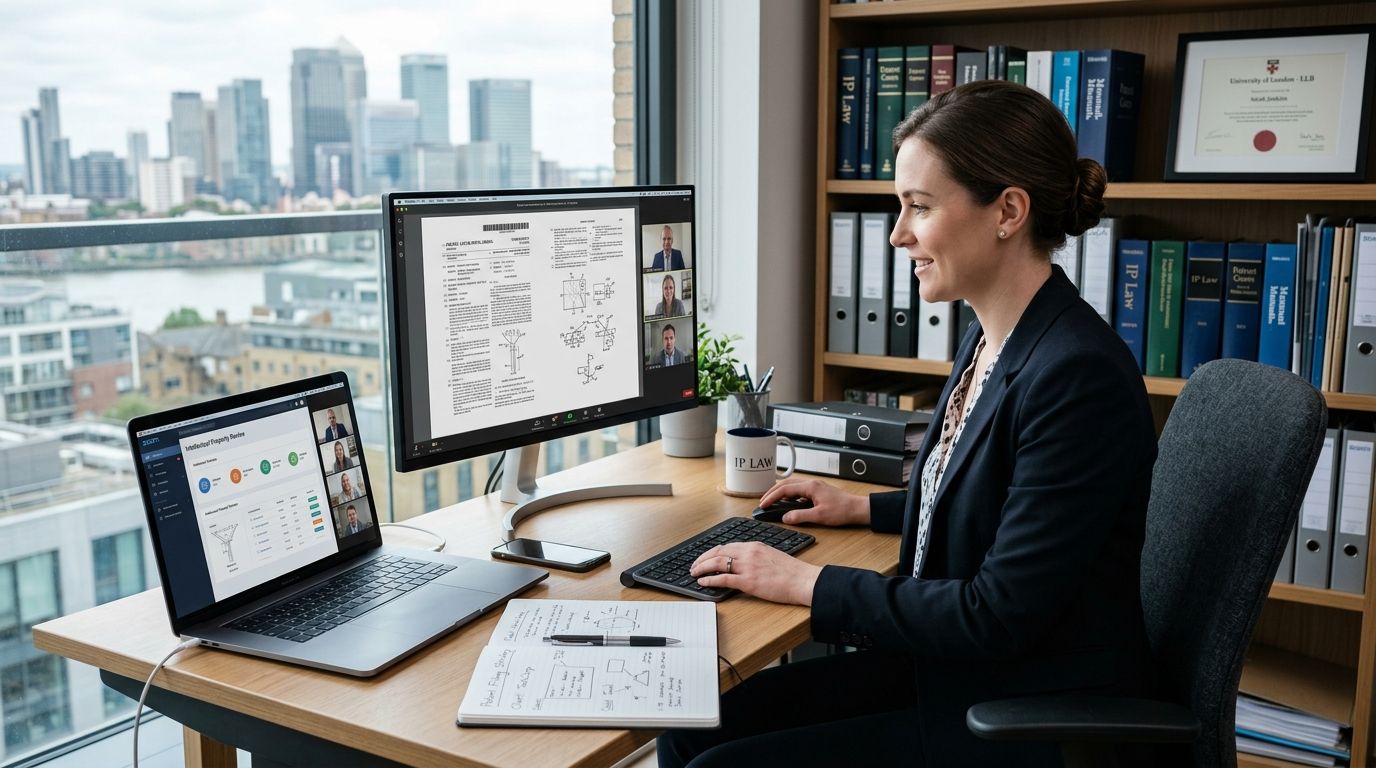
Virtual office for patent attorneys is a registered business address and mail-handling service that keeps a practitioner's home address off the public IP Australia register while still giving clients a credible place to meet. Patent attorneys and IP consultants handle confidential filings, licensing disputes and provisional applications that don't belong on a residential letterhead, and Werribee's growing base of solo practitioners and small IP consultancies needs a professional front without the overhead of a full-time office lease.
- Westend Business Hub's virtual office for patent attorneys keeps a home address off the public IP Australia register.
- Meeting rooms in Werribee support confidential client consultations without inviting anyone to a house.
- Mail handling covers IP Australia correspondence, signed deeds and courier packages addressed to the practice.
- Best for solo patent attorneys, trade mark consultants and small IP firms working from home or interstate.
Why virtual offices matter for patent attorneys
A registered patent attorney's business address often ends up on public record: the Register of Patent Attorneys, client engagement letters, IP Australia correspondence, and even court filings if a dispute escalates. Running that correspondence through a home address means anyone searching the register can find where a practitioner lives, which is a real problem for attorneys who work solo or from a home study in Werribee, Hoppers Crossing or Point Cook.
Werribee sits about 32km southwest of Melbourne's CBD, close enough for city-based IP litigation work and clients but far enough that a local, professional address reads as deliberate rather than a stopgap. A virtual office for patent attorneys solves the address problem directly: it separates the public-facing business identity from the practitioner's private residence while keeping costs down compared to a full commercial lease in 2026.
The segment's real constraint isn't volume of mail — it's confidentiality and credibility. A prospective client checking a patent attorney's address before signing an engagement letter reads a residential street name very differently to a recognised business address with meeting rooms attached.
Update your public address before it becomes a problem
The cheapest fix costs nothing but attention: audit every place your home address currently appears before a client, competitor or opposing counsel finds it first.
- Search the Register of Patent Attorneys for your own listed address and note what's public
- Check IP Australia correspondence templates, engagement letters and invoices for a residential address
- Update your ABN and business name registration if the ASIC record still shows a home address
- Review your website, LinkedIn and Google Business Profile for the same exposure
- Once the audit is done, a private office for law firms and legal consultants gives you one consistent address to update everywhere instead of patching each record separately
Separate client meetings from your home office
Confidential IP discussions — freedom-to-operate opinions, licensing terms, dispute strategy — don't belong in a café or a spare bedroom with kids in the next room.
- Use a local library meeting room for occasional client calls if budget is the only constraint
- Rent a serviced meeting room by the hour for higher-stakes consultations
- Keep a standing weekly slot booked so clients always know where to find you
- Bring printed drafts and NDAs to a room designed for confidential conversation, not a shared coffee shop table
Once meetings happen more than once or twice a month, a fixed booking pattern in a dedicated room reads more professional than ad hoc café catch-ups, and it protects client confidentiality far better.
Handle correspondence and courier deliveries properly
IP Australia sends formal notices, deadlines and examination reports by mail as well as electronically, and signed deeds or trade mark assignments still arrive by courier more often than most attorneys expect.
- Set a fixed collection schedule if using a PO box, so deadline-sensitive mail never sits unread
- Ask family or housemates before listing a home address as a courier drop point for client documents
- Use registered post tracking for anything with a statutory deadline attached
- A mail-scanning service tied to your business address removes the guesswork: notices get scanned and forwarded the same day they land
Put your professional address on every document that matters
Inconsistency between the address on your website, your invoices and your IP Australia filings looks sloppy to a client checking your credentials, and it's an easy fix once you've settled on one address.
- Standardise the address across invoices, engagement letters, and IP Australia correspondence templates
- Update your accounting software's business profile in one sitting rather than patching invoices one at a time
- Check that contracts and NDAs reference the same registered address as your public listing
- Using a virtual office address on invoices and contracts walks through the paperwork order most attorneys skip until a client asks about it
Add occasional desk access for the days you need to be in an office
Most solo patent attorneys don't need a desk five days a week, but a filing deadline week or a run of client meetings makes a fixed desk worth having on hand.
- Book a hot desk only on the days a deadline or meeting demands it
- Keep a locker or filing cabinet on-site for physical deeds and signed originals
- Test hybrid access for a month before committing to a permanent private office
- Track which weeks you actually used desk access versus paid for it unused
Budget the virtual office as a genuine business cost
A registered address, mail handling and occasional meeting room access are legitimate running costs for a patent attorney practice, the same as professional indemnity insurance or software subscriptions.
- Record the virtual office fee as a recurring business expense, not a discretionary extra
- Keep the tax invoice on file for your accountant at year-end
- Compare the annual cost against a commercial lease for the same address credibility
- Review usage every 12 months to check the plan still matches how often you actually meet clients on-site
Plan the upgrade path before you need it
A solo practice today can become a two-partner IP firm within a year or two, and the address setup should scale without a full re-registration.
- Decide in advance whether growth means adding a second registered practitioner to the same address
- Check whether a private office is available at the same site before signing elsewhere
- Keep client-facing paperwork ready to update fast if the address itself changes
- Confirm how mail redirection works if you outgrow a virtual plan mid-year
Book a room for your next client meeting
Reserve a private meeting room in Werribee for confidential IP consultations.
Comparing your options as a patent attorney
| Option | Best for | Key limitation |
|---|---|---|
| Home office | Solo attorneys just starting out with no client meetings yet | Personal address ends up on the public register and client paperwork |
| PO box | Basic mail separation on a tight budget | No street address for registration, no meeting space, no courier acceptance |
| Virtual office address | Solo and small IP practices needing a credible registered address | No permanent desk included unless you add hot desk or hybrid access |
| Private office | Growing IP firms with two or more practitioners | Higher ongoing commitment than a virtual plan alone |
A virtual office for patent attorneys wins for solo and small IP practices that need a credible registered address and occasional meeting space without leasing a full office in 2026.
Common mistakes patent attorneys make with their business address
- Leaving the home address on IP Australia correspondence even after updating the website, so the exposure stays half-fixed
- Meeting clients in cafés for confidential IP discussions because booking a proper room feels like an unnecessary step
- Treating mail scanning as optional and then missing a statutory deadline buried in a PO box
- Skipping the paperwork audit and updating invoices but forgetting engagement letters or NDAs still show the old address
- Signing a full private office lease too early, before actually testing how often client meetings happen in person
FAQ
What is a virtual office for patent attorneys?
It's a registered business address and mail-handling service that a patent attorney or IP consultant uses instead of a home address on public filings, invoices and the Register of Patent Attorneys. It typically includes mail scanning, courier acceptance and optional meeting room access.
Can I use a virtual office address on the Register of Patent Attorneys?
Yes, a registered business address can be used on the Register of Patent Attorneys and on IP Australia correspondence as long as mail sent there reaches you reliably. A mail-scanning service tied to the address covers this.
Do IP consultants need a meeting room as well as an address?
Most IP consultants need occasional meeting room access for confidential client discussions, even if daily desk space isn't required. A booked room protects client confidentiality far better than a café table.
Is a virtual office better than working from home for a patent attorney?
A virtual office is better than a home office once client trust and public register exposure matter, because it separates a private residence from business correspondence. A home office works fine before any client-facing filings exist.
How does mail get handled for a virtual office?
Mail addressed to the registered business address gets collected and typically scanned or forwarded on a set schedule, covering IP Australia notices and courier-delivered signed documents.
Can I upgrade from a virtual office to a private office later?
Yes, most virtual office plans allow an upgrade to a private office as a practice grows, keeping the same registered address throughout the transition.
Does a virtual office work for a solo patent attorney with no staff?
Yes, a virtual office is built for solo practitioners who need a credible address and occasional meeting space without hiring staff or leasing a full office.
One last thing
The detail most patent attorneys miss isn't the address itself — it's the paperwork trail behind it. An address change that isn't reflected across the Register of Patent Attorneys, IP Australia correspondence, invoices and engagement letters at the same time creates a confusing record that looks worse than never updating it at all. Fix all four in the same sitting, not one at a time.


