
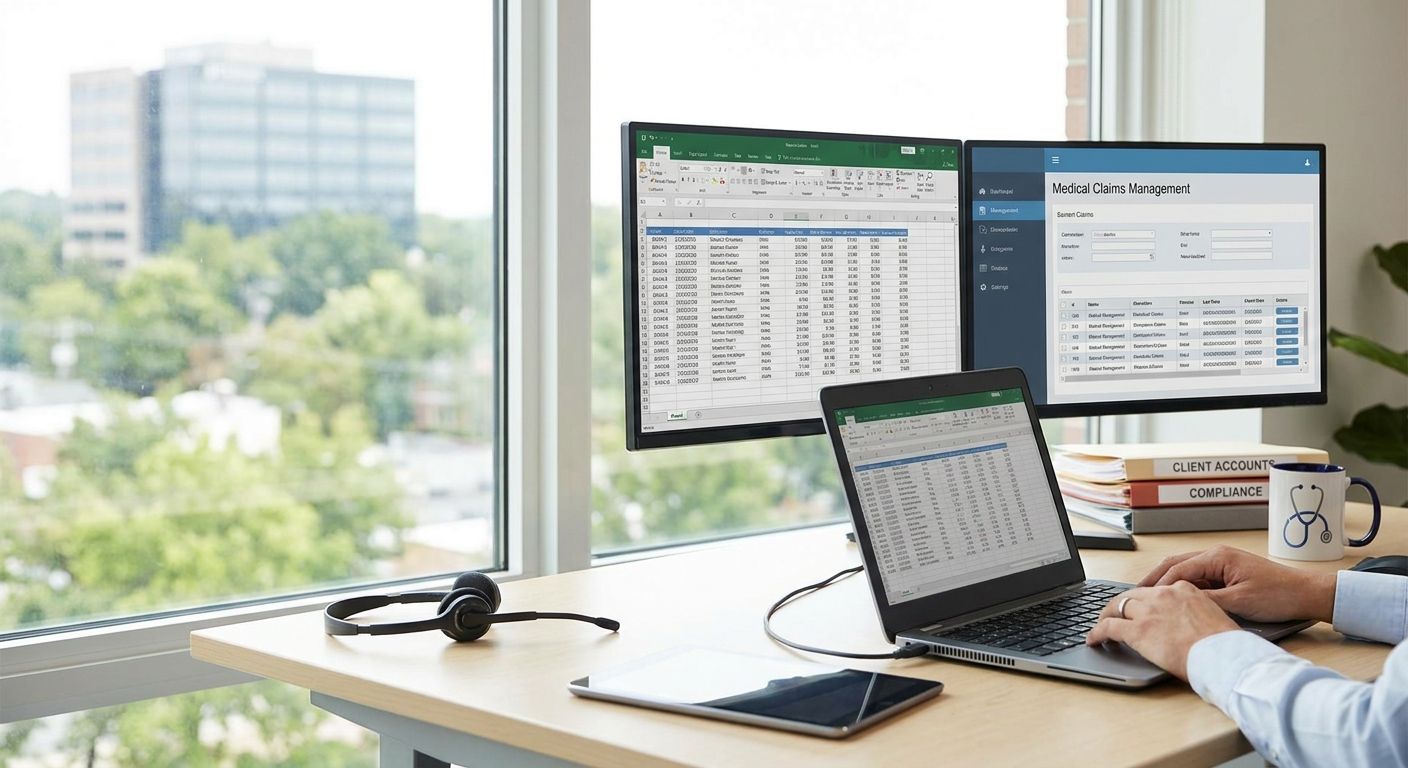
Medical billing providers handle sensitive patient and payment data every day, which means the business address on file matters as much as the software they use. This guide ranks the virtual office plan types that fit medical billing operators best in 2026, based on how each one handles mail, meetings, and privacy.
Best overall: the Virtual Office (Business Address + Mail Handling) plan. Best for client and referrer meetings: the Meeting Room Access add-on. Best for growing billing teams: the Private Office. Best budget option for solo operators scaling up: the Dedicated Desk plan.
- The best virtual office for medical billing providers in 2026 is a Business Address + Mail Handling plan for solo operators.
- Growing billing teams handling patient records do better with a Private Office than an open desk.
- Meeting Room Access covers occasional in-person work without renting a full office.
- Westend Business Hub in Werribee offers all four plan types without locking you into one for life.
Why this matters
A home address on an invoice or a Medicare correspondence letter reads as unprofessional to referring practices, and it exposes your home location on public business registers. Medical billing providers in Melbourne's west are increasingly separating their registered address from their home address for exactly this reason, and the trend has held through 2026.
The fix isn't always a full office lease. Westend Business Hub's virtual office plans in Melbourne's west cover everything from a mail-handling-only setup to a full private office, and picking the wrong tier either wastes money or leaves you working confidential calls from a kitchen table.
What makes the best virtual office plan for medical billing providers
- Privacy-conscious mail handling — billing correspondence, remittance advices and compliance letters need to land somewhere secure, not a shared letterbox.
- A registered address separate from home — for ABN and ASIC records, and for anything a referring practice might look up.
- A private space for client calls — billing conversations involve patient account details and can't happen in an open lounge.
- Occasional meeting room access — for the rare in-person sit-down with a practice manager or new client.
- Flexibility to scale up — billing providers grow in staff headcount before they grow in floor space needs.
- Proximity to Melbourne's western suburbs — Werribee, Point Cook and Hoppers Crossing clients don't want to drive into the CBD for a signature.
At a glance
| Plan | Best for | Standout feature | Key limitation |
|---|---|---|---|
| Virtual Office (Address + Mail Handling) | Solo/home-based billing providers | Registered address kept separate from home | No dedicated desk included |
| Meeting Room Access | Client and referring-practice consultations | Bookable private room for confidential discussions | Booked by the hour, not a daily base |
| Private Office | Growing billing teams handling patient records | Lockable, private space for a team | Bigger commitment than a single desk |
| Hot Desk Access | Hybrid billing staff on occasional office days | Pay-as-you-go desk access | No permanent desk or storage |
| Dedicated Desk | Solo billing entrepreneurs scaling up | Same desk each visit plus storage | Less private than a full office |
1. Virtual Office (Business Address + Mail Handling): best for solo billing providers
A virtual office for consultants working from home gives a solo medical billing provider a registered address and mail handling without renting a desk they'd barely use. Correspondence from Medicare, health funds and practices gets collected somewhere professional instead of a home letterbox.
Virtual Office pros:
- Keeps a home address off public business registers
- Mail collected and held rather than left exposed
- Costs far less than a leased office
- Works from day one of registering the business
Virtual Office cons:
- No desk or meeting space included by default
- Not enough on its own once a team grows past one person
Virtual Office pricing: plans vary — check current options directly with Westend Business Hub.
Best for: solo or home-based billing operators who need a professional address, nothing more. Verdict: Buy.
2. Meeting Room Access: best for client and referrer consultations
Meeting room hire for client presentations solves the one problem a virtual-only address can't: the occasional in-person meeting. A billing provider onboarding a new medical practice or walking a client through a reconciliation report needs a private room, not a café table.
Meeting Room Access pros:
- Private, bookable space for confidential discussions
- Presents a professional front without daily overhead
- Pairs naturally with a virtual office plan for an address plus a meeting option
Meeting Room Access cons:
- Booked by the session, not a permanent base
- Availability depends on demand at busy times
Meeting Room Access pricing: billed per booking — confirm current rates with Westend Business Hub.
Best for: billing providers who meet clients occasionally but don't need daily desk space. Verdict: Buy.
3. Private Office: best for growing billing teams
A private office for allied health practitioners style setup suits a billing team once it grows past one person and starts handling patient account data across multiple staff at once. Lockable doors matter when several people are on the phone about someone's account balance at the same time.
Private Office pros:
- A locked, private space for a team of two or more
- Room for filing and equipment beyond a laptop
- Removes the noise-and-privacy issue of an open desk
Private Office cons:
- More commitment than a single desk or virtual plan
- Overkill for a solo operator still building a client list
Private Office pricing: scaled to team size — get current terms from Westend Business Hub.
Best for: billing teams of two to five who need a dedicated, private base. Verdict: Buy.
4. Hot Desk Access: best for hybrid billing staff
A hot-desk arrangement fits a billing provider whose staff split their week between home and an office day. It's the middle ground between a full private office and working from home five days straight, and it's the plan that gets skipped most often when people jump straight to leasing a room they only need twice a week.
Hot Desk pros:
- Pay for office days only, not a fixed lease
- Fast to start, no long commitment
- Useful for staff who need a change of scene occasionally
Hot Desk cons:
- No permanent desk or storage between visits
- Not suited to a team that's in the office daily
Hot Desk pricing: pay-as-you-go — ask Westend Business Hub for current availability.
Best for: billing staff working occasional office days rather than a full week. Verdict: Hold — good fit only if your team's office days are genuinely occasional.
5. Dedicated Desk: best for solo billing entrepreneurs scaling up
A dedicated desk plan suits a billing provider who's outgrown the kitchen table but isn't ready for a private office. Same desk, same spot, every visit, with storage for files that shouldn't be scattered across a home.
Dedicated Desk pros:
- Consistent workspace without the cost of a private office
- Storage included, unlike a hot desk
- A natural step up from working from home
Dedicated Desk cons:
- Less private than a lockable office
- Not built for a multi-person team
Dedicated Desk pricing: monthly membership — confirm current rates with Westend Business Hub.
Best for: a solo billing entrepreneur ready to leave the home office behind. Verdict: Buy.
How we ranked these
Each plan was measured against the criteria above: privacy-conscious mail handling, a registered address separate from home, private space for client calls, occasional meeting access, room to scale, and proximity to Melbourne's western suburbs. The Virtual Office plan ranks first because it solves the most urgent problem — a home address on public record — at the lowest commitment. The others rank by how directly they solve a secondary need: meetings, team privacy, occasional office days, or a permanent desk.
Which virtual office plan should you choose?
Start with the Virtual Office (Business Address + Mail Handling) plan if you're a solo medical billing provider working from home in 2026 — it's the lowest-commitment fix for the biggest exposure. Add Meeting Room Access the first time a client or referring practice asks to meet in person. Move to a Private Office once your team passes one or two staff and patient data is being discussed across several desks at once. If your team's office attendance is occasional rather than daily, Hot Desk Access covers that gap without paying for a lease you don't need.
FAQ
What is the best virtual office for medical billing providers in 2026?
A Business Address plus Mail Handling plan is the best starting point for most medical billing providers in 2026, since it separates a registered address from a home address at the lowest cost. Teams that grow past one person typically add a Private Office once patient data is handled across multiple staff.
Do medical billing providers need a registered business address?
Yes — ABN and ASIC records require a business address, and using a home address exposes that location on public registers. A virtual office plan provides a separate address for this purpose.
Is a private office better than a virtual office for a billing team?
A private office suits a team of two or more handling patient account data across several desks, while a virtual office suits a solo operator who mostly works remotely. Most billing providers start virtual and move to a private office as headcount grows.
How much does a virtual office cost for a small business in 2026?
Pricing varies by plan and provider, and current rates should be confirmed directly with Westend Business Hub rather than assumed from older figures.
Can a virtual office handle mail for a medical billing business?
Yes — mail handling is included in most virtual office plans, covering correspondence from health funds, Medicare and referring practices without exposing a home letterbox.
Do I need a meeting room if I run a virtual office?
Only if you meet clients or referring practices in person. Meeting Room Access is typically booked by the session and pairs well with a virtual office address for providers who meet occasionally rather than daily.
Can I switch from a virtual office to a private office later?
Yes — most billing providers start with a virtual office plan and move to a private office once their team outgrows a single desk, without needing to change their registered address again.
Is a hot desk suitable for a medical billing team?
A hot desk works for staff who only need office access on occasional days, but it lacks the permanent storage and privacy a billing team handling patient records usually needs full-time.
One last thing
Westend Business Hub was named a finalist in the Excellence in Professional and Business Services category at the 30th Wyndham Business Awards — a detail worth knowing if you're choosing an address partner based on standing in the local business community, not just square footage. For a billing provider, that kind of local reputation matters more than it looks on paper, since referring practices often ask around before sending business your way.


