
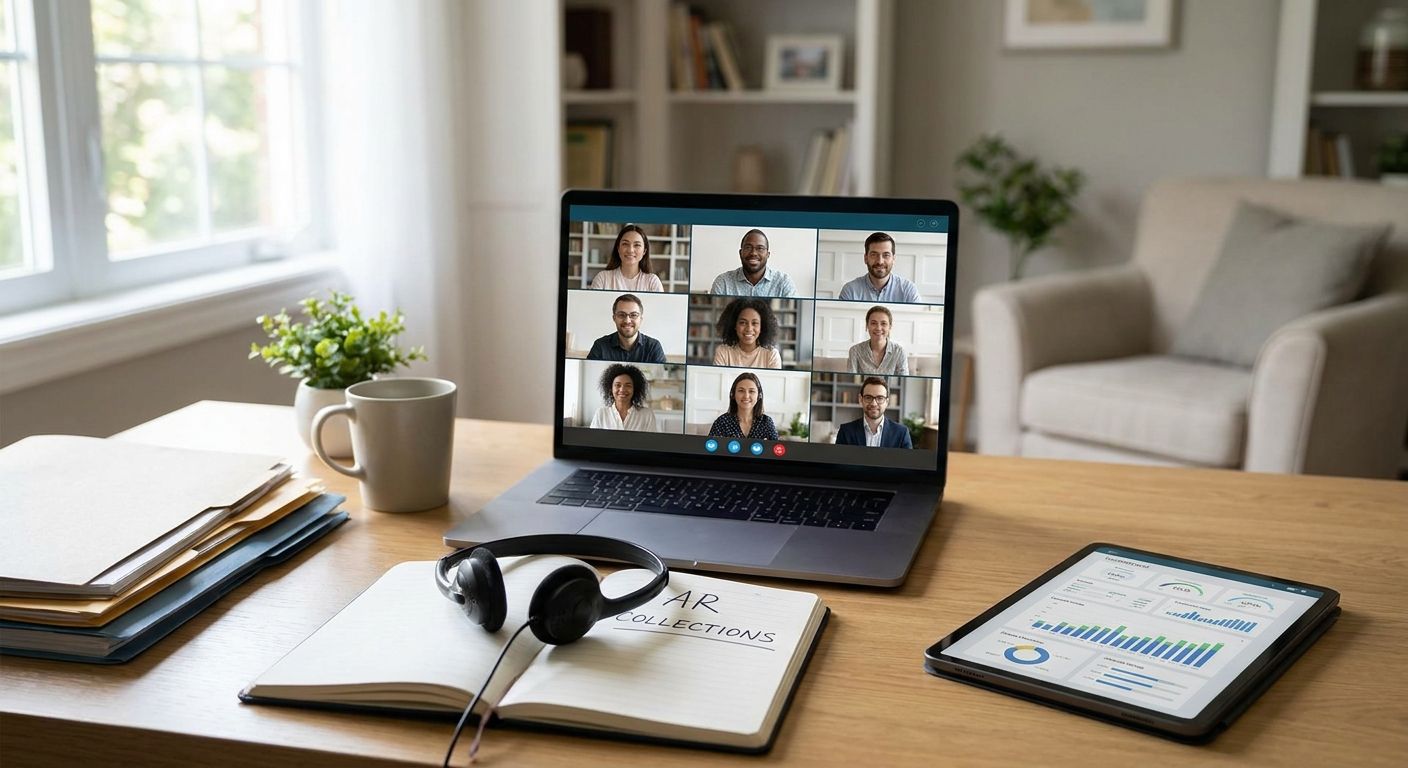
Virtual office for debt collection agencies is a registered business address and professional mail service that keeps your home off ASIC and ABN public records while giving debtors, clients and regulators a real Werribee location to contact. Collection agencies deal with people under financial stress, so the privacy angle matters more here than for most small businesses — the wrong exposure can mean a debtor turning up at your front door instead of your office.
- Westend Business Hub's virtual office for debt collection agencies keeps your home address off ASIC and ABN public records.
- Book a private meeting room in Werribee only when a client or auditor needs a face-to-face — no lease needed.
- Mail scanning turns letters of demand and compliance notices into same-day PDFs instead of a stack in a home letterbox.
- Verdict: a virtual office suits solo collectors and small agencies; a private office suits teams past three or four staff.
Why this matters for debt collection agencies
Debt collectors are required to identify themselves and the business they represent in written correspondence — a core part of the ACCC and ASIC debt collection guideline. Your business address sits on every letter of demand, every ABN lookup, and every ASIC company search a debtor or their lawyer can run in 2026.
If that address is your home, anyone chasing a dispute — or just angry about a call — can find your street. A virtual office plan in Melbourne's west puts a Werribee commercial address on the public record instead, without you renting a desk you don't need seven days a week.
This isn't a nice-to-have the way it might be for a freelance designer. It's risk management. A registered office that isn't your home protects your family's privacy and keeps your correspondence looking like it comes from an actual business, not a kitchen table.
Setting up your virtual office, step by step
Audit where your home address already appears
Before you fix anything, find out what's exposed. Most agency owners are surprised how many places their home address quietly ended up.
- Search your own ABN and ASIC company record to see what is currently public
- Check your last three letters of demand for the address printed at the top
- List every regulator or membership body holding your address — ASIC, the ATO, AFCA if you are a member
- Check invoicing software and your website footer for the same leak
Choose a registered office that isn't your home
The free route first: some sole operators use an accountant's office or a business partner's address as their ASIC registered office. It works, but it ties your public record to another person's home or a favour that can end without notice.
A virtual office address is the faster, more durable fix — it is built to be used as your registered office and principal place of business, not just a parcel drop.
- Confirm the provider allows the address for ASIC registered office and ABN registration, not only mail receiving
- Check the address change process — ASIC requires company details to be updated within 28 days of a change
- Ask what the plan includes beyond the street address itself
- Update your ABN, ASIC record and any membership details on the same day you switch
Set up mail handling for legal and compliance correspondence
Debt collection agencies get more formal mail than most small businesses — dispute responses, AFCA correspondence, court paperwork, statutory demands from third parties. A letterbox filling up unattended is a compliance risk, not just clutter.
- Get a digital notification when new mail arrives instead of driving in to check
- Have time-sensitive legal mail scanned and emailed the same day it lands
- File scanned compliance mail into dated folders so you can prove response timelines if a dispute escalates
- Forward physical originals to your accountant or lawyer only when the original document matters
Book a meeting room for the conversations that shouldn't happen over speakerphone
Not every debtor conversation needs a room. Settlement negotiations, hardship applications and creditor meetings go better face-to-face, in a professional setting that isn't a cafe where the next table can hear the numbers.
- Reserve a room only for meetings that genuinely need privacy, not as a daily habit
- Use meeting room hire for client presentations when a creditor wants to see your process in person
- Bring printed hardship or payment plan paperwork rather than a laptop screen someone has to squint at
- Keep sensitive conversations in the room, not on the shared floor
Put the new address on every document carrying the old one
An address change is only real once it is everywhere your business writes its name.
- Update letters of demand, invoices and email signatures in the same week
- Update your website contact page and Google Business Profile listing
- Notify AFCA, your professional indemnity insurer and any licensing body that lists your address
- Tell existing clients where correspondence should now be sent, especially anyone mid-dispute
Scale up only when headcount justifies it
A virtual office covers a solo collector or a two-person agency comfortably. Once you run a team handling calls, hardship reviews and legal correspondence daily, a shared floor or private office starts to earn its keep.
- Track how often staff actually need a desk versus working remotely on calls
- Compare casual desk access against a dedicated private office before committing
- Keep the same registered address through the upgrade so your public record doesn't change twice
- Review the setup every six months as team size shifts
Compare your options
| Option | Best for | Key limitation |
|---|---|---|
| Home address on ASIC/ABN | Sole operators with no debtor-facing risk | Publicly searchable — exposes your street to debtors and disputes |
| Accountant or partner's address | Agencies with an existing trusted third party | Depends on someone else's goodwill; not built to scale |
| PO Box | Basic mail privacy only | ASIC and most banks won't accept it as a registered office |
| Virtual office (Westend Business Hub) | Solo collectors and small agencies wanting a compliant, private registered address | No daily desk access unless added to the plan |
| Private office | Teams of three or more handling calls and files on-site daily | Higher ongoing commitment than a virtual-only plan |
Verdict: a virtual office is the right call for any receivables agency still run from a spare room in 2026 — it separates the public record from your front door without locking you into a lease.
“If a debtor can find your home address through an ASIC search, they have found your front door too.”
Common mistakes debt collection agencies make
- Registering the ASIC office as home, then trying to fix it after a dispute escalates. By then the old address is already printed on every letter sent that year.
- Using a PO Box as the registered office. ASIC does not accept it, so the company record falls back to a director's home address anyway.
- Forgetting to update AFCA or licensing bodies after switching. A mismatch between your ASIC record and your membership file creates its own compliance headache.
- Letting statutory demands sit unopened for a week. Response deadlines on legal correspondence do not pause because nobody checked the letterbox.
- Booking a full-time desk the team uses twice a week. A virtual office with occasional meeting room access covers most agencies at this size in 2026.
Get a compliant business address
Set up a Werribee virtual office and keep your home address off the public record.
FAQ
What is a virtual office for a debt collection agency?
It is a registered business address and mail-handling service used on ASIC records, ABN registration and correspondence instead of a home address. It gives clients, debtors and regulators a professional Werribee location to contact without renting a full-time desk.
Can I use a virtual office address to register my debt collection business with ASIC?
Yes, provided the provider allows the address to be used as a registered office and principal place of business, not just a mail drop. Confirm this before you register, because not every mailbox service qualifies.
Is a virtual office private enough for a receivables agency?
It is far more private than a home address, because it removes your street from public ASIC and ABN searches. Mail handling and meeting rooms stay separate from where you actually live.
Do I need a meeting room too, or just the address?
Most solo collectors only need the address and mail handling day to day, booking a room only for settlement talks or creditor meetings. Agencies with regular client-facing work use meeting rooms more often.
How does mail handling work for legal and compliance letters?
Incoming mail is scanned and emailed so time-sensitive statutory demands or AFCA correspondence do not sit unopened. Physical originals can be forwarded when the paper document itself matters.
Can I put the virtual office address on letters of demand?
Yes. Once it is set as your registered ASIC address it can appear on any business correspondence, including letters of demand and invoices. Update every document at once so old and new addresses are not both circulating.
What happens if my agency grows and needs a private office?
You can move from a virtual plan to a private office while keeping the same registered address, so your public record does not change again. That usually makes sense once a team works on-site daily.
Is a PO Box enough for a debt collection agency?
No. ASIC and most banks do not accept a PO Box as a registered office, so your company record defaults back to a director's home address. A commercial virtual office address avoids that fallback.
One last thing
The detail agencies miss most in 2026 is not the address itself — it is the 28-day window ASIC gives you to update your company record after a change. Switch your registered office and forget the update, and the old home address stays live and searchable for weeks longer than it needs to.


