
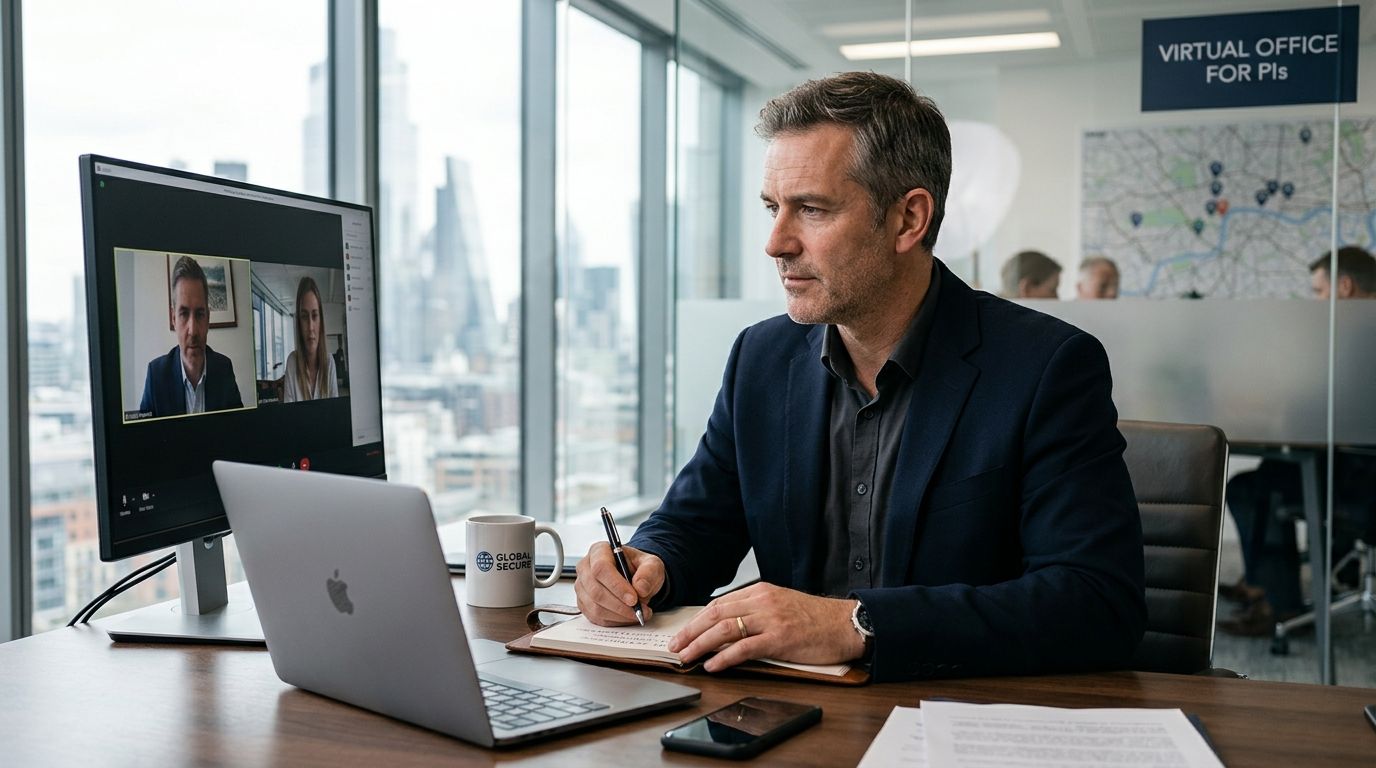
A virtual office for private investigators is a registered business address, mail handling and call-answering service that lets you run a PI or security consultancy without listing your home address on licences, invoices or ASIC records. Investigators and security consultants have a different risk profile than most small businesses: your name, and often your address, ends up in front of the exact people you're investigating.
Westend Business Hub in Werribee gives private investigators and security consultants a business address separate from home, with mail handling, phone booths for confidential calls, and meeting rooms for client intake. That separation matters more in this trade than in almost any other professional service, and it's the first thing a virtual office fixes.
- A virtual office for private investigators keeps your home address off ASIC records, PI licences and invoices in 2026.
- Westend Business Hub in Werribee suits solo investigators and small security consultancies who need a fixed address without daily desk costs.
- Phone booths and meeting rooms matter more here than in most industries, since client intake and informant calls need privacy.
- A PO Box won't satisfy most state licensing bodies; a registered virtual office address usually will.
- Upgrade to a private office once you're storing physical case files or running a small in-house team.
Why this matters for private investigators and security consultants
PI licensing bodies across Australian states, including Consumer Affairs Victoria, require a registered business address on file, and that address is publicly searchable in most licence registers. If that address is your home, anyone who looks up your licence, your ABN, or a court filing can find where you sleep.
Security consultants face a similar problem from the other direction: clients doing due diligence before signing a contract expect a real, professional address, not a residential unit number. A home address undermines the credibility a security or investigations business needs to win corporate contracts in 2026. The fix isn't complicated, but it needs to happen before licensing paperwork goes in, not after.
Separate your home address from your PI licence and ASIC registration
Start here, because every other decision follows from it.
- Check your state's specific requirement for a registered business address on PI and security licence applications before you submit anything.
- Register a business address that's distinct from your residential address on your ASIC company or business name record.
- Update your licence renewal paperwork so renewal notices and compliance letters don't lag behind.
- Confirm the address accepts official correspondence, since licensing bodies and courts do send physical mail.
A virtual office address through Westend Business Hub in Werribee covers this without requiring you to lease a desk you don't need.
Set up a private line for client and informant calls
Investigators field calls from clients, subjects' lawyers, and sometimes informants who expect discretion. A personal mobile number blurs all of that together.
- Route business calls through a dedicated number rather than your personal mobile.
- Book a soundproofed space for calls involving case details, client names, or sensitive findings.
- Keep a written log of who called and when, separate from personal contacts.
- Use call screening or a receptionist service if your volume of unsolicited inquiries is high.
The phone booths for private calls at Westend Business Hub exist for exactly this kind of conversation, where a shared open-plan desk isn't appropriate.
Handle sensitive mail and case documents securely
Subpoenas, licence renewals, insurance correspondence and case-adjacent paperwork land in your mailbox. Losing track of any of it has consequences.
- Set up a locked mailbox or mail-receiving service rather than a shared apartment letterbox.
- Have time-sensitive mail scanned and emailed so you're not waiting on physical collection for urgent notices.
- Keep a chain-of-custody habit for anything case-related, even routine business mail.
- Redirect old mail immediately if you've moved from a home address to a registered one.
Westend Business Hub's mail scanning and email service means urgent licensing or legal correspondence doesn't sit in a physical box for days before you see it.
Book a professional space for client intake meetings
A first meeting with a new client, especially a corporate one hiring a security consultant, sets the tone for the whole engagement.
- Reserve a private meeting room rather than a public cafe for any conversation involving case specifics.
- Bring signed contracts and NDAs to a controlled space, not a shared table.
- Use a professional room for briefings with insurers, lawyers, or referral partners.
- Keep client-facing meetings physically separate from your day-to-day admin work.
Meeting room hire for client presentations gives investigators and security consultants a controlled, private setting without the cost of leasing a permanent office suite.
Build licensing and insurance paperwork around a stable address
Insurers, licensing bodies and industry associations all want a consistent address on file. Moving flats every year and re-registering each time creates gaps.
- Lock in one registered address before applying for professional indemnity or public liability cover.
- Use the same address across your licence, ABN, insurance policy and business bank account.
- Avoid switching addresses mid-renewal cycle, since it can delay licence processing.
- Keep a record of the date you registered the address, for licence audit purposes.
Add credibility to your invoices and contracts
How you present yourself on paper affects how seriously corporate and legal clients take a quote.
- Put a real street address, not a mobile number alone, on every invoice and contract.
- Match the address on your invoices to the one on your licence and ASIC record.
- Include a dedicated business number alongside your mobile.
- Review your letterhead and email signature so the details match across every channel.
Plan fieldwork logistics around a fixed base
Surveillance and site visits mean investigators are rarely at a desk all day, but that doesn't remove the need for a fixed base.
- Use a base address for admin work and equipment storage between jobs.
- Schedule report-writing and client debriefs at the same location each week to keep a routine.
- Keep case files and devices in a locked space rather than a car boot between jobs.
- Treat the base as the address clients and licensing bodies see, regardless of where the fieldwork happens.
Comparing your options in 2026
| Option | Best for | Key limitation |
|---|---|---|
| Virtual office address (Westend Business Hub) | PIs and security consultants needing a compliant, discreet address separate from home | No daily desk space unless paired with a hot-desk or private office plan |
| Home address | Solo operators starting out with no client-facing needs yet | Exposes your home address on ASIC records, invoices and licence paperwork |
| PO Box | Mail-only needs with no street-address requirement | Most licensing bodies reject a PO Box as a registered business address |
| Private office | Consultancies handling sensitive files or running a small in-house team | Higher ongoing commitment than a virtual plan |
| Registered agent service | Companies needing only a compliance address | No call answering or meeting room access included |
Verdict: a virtual office address is the right fit for most solo PIs and small security consultancies in 2026 — it satisfies licensing requirements without the overhead of a full-time lease.
Set up a compliant business address
Register your PI or security consultancy at a Werribee address built for client privacy.
Common mistakes private investigators and security consultants make
- Registering the PI licence to a home address, then re-filing paperwork once they realise it's publicly searchable.
- Meeting new clients at cafes instead of a private room, discussing case details where anyone nearby can overhear.
- Listing only a mobile number on invoices and contracts, which reads as informal to corporate clients doing due diligence.
- Ignoring mail redirection after a move, missing a licence renewal notice or insurer correspondence sent to the old address.
- Delaying the address update on Google Business Profile and ASIC records, so the business looks inactive to anyone checking in 2026.
FAQ
What is a virtual office for private investigators?
It's a registered business address, mail handling and call-answering service that lets a PI or security consultant list a professional address instead of their home. It typically includes mail collection or scanning plus access to meeting rooms for client work.
Can a PI licence be registered to a virtual office address in Victoria?
Yes, as long as the address is a genuine, staffed business address that can receive official correspondence. Check the specific requirement with the relevant licensing body before applying, since rules vary by licence type.
Is a virtual office better than a home office for security consultants?
For most consultants dealing with corporate clients, yes. A home address on public licence records and invoices undermines credibility and creates a privacy risk a registered virtual address avoids.
Can I use a virtual office address on invoices and licensing documents?
Yes, provided the address matches what's registered with ASIC and your licensing body. Consistency across invoices, contracts and licence paperwork matters more than which address you pick.
Do virtual offices include private meeting rooms for client intake?
Westend Business Hub offers bookable meeting rooms alongside its virtual office plans. That matters for investigators handling sensitive client conversations that shouldn't happen in open-plan space.
How is a virtual office different from a registered agent service?
A registered agent service usually only forwards compliance mail. A virtual office adds call handling, mail scanning and physical meeting space, which investigators and consultants need for day-to-day client work.
Can I upgrade from a virtual office to a private office later?
Yes. Many operators start with a virtual office while building a client base, then move to a private office once they're storing physical case files or hiring staff.
Is a PO Box enough for a PI or security business?
Usually not. Most state licensing bodies require a genuine street address on the licence application, and a PO Box doesn't meet that requirement.
One last thing
The detail most investigators miss isn't the address itself — it's updating it everywhere at once. A licence, an ASIC record, an insurance policy and a Google Business Profile that all list different addresses look inconsistent to exactly the people running background checks on you: insurers, corporate clients and licensing auditors. Lock the address in once, update all four in the same week, and move on.


